Sedeplenist chris jackson?: A Sedevacantist Thought Experiment Retaining an Indefectible Church When the Hierarchy Defects Chris Jackson's avatar Chris Jackson
A Sedevacantist Thought Experiment
Retaining an Indefectible Church When the Hierarchy Defects

Introduction: The Jurisdiction Crisis in the Sedevacantist Paradigm
I am not a Sedevacantist. However, this article offers a theological thought experiment: Is it possible for the Church to retain formal apostolicity without a reigning pope or bishops canonically assigned by one? The context is the sedevacantist position: that those claiming office in the Vatican since Vatican II, including the post-conciliar papal claimants and all bishops with ordinary jurisdiction, have defected from the Catholic Faith.
But this position raises a grave theological problem: How can the Church remain apostolic in her governance if no bishop possesses ordinary jurisdiction through papal mission?
What follows is a proposed resolution. Not a dogmatic claim, but a systematic exploration grounded in sacramental theology, canonical equity, and historical precedent. It is addressed to those seeking to defend the theological possibility of sedevacantism while preserving the formal apostolicity and indefectibility of the Church.
Section I: The Traditional Teaching on Jurisdiction and Apostolicity
Before Vatican II, theologians generally agreed:
Formal apostolicity requires the continuation of apostolic office; specifically, the office of governance (which includes jurisdiction).
Jurisdiction in its ordinary form was normally conferred via canonical mission from the Roman Pontiff.
A break in ordinary jurisdiction could threaten the Church’s indefectibility, which requires hierarchical continuity.
Pius XII, in Ad Apostolorum Principis (1958), reasserted this tradition:
“In the rite of episcopal consecration there is undoubtedly conferred the power of order; but the power of jurisdiction, which is conferred only by the Roman Pontiff, is clearly distinct from the power of order.”
This was not a definition of sacramental theology, but a juridical instruction concerning the normal canonical process. But the sede thesis presumes we are not living in normal conditions.
It is also important to note that “governance” and “jurisdiction” are not precisely synonymous. Jurisdiction is a component of the broader power of governance (regendi), which also includes teaching and sanctifying.
Section II: The Problem of Jurisdiction During an Extended Interregnum
If there hasn’t been a true pope since 1958, and there are no bishops canonically appointed by a true pope still exercising office, then no one currently possesses canonical mission in the ordinary juridical sense (a territorial assignment by a reigning pope).
If no one possesses canonical mission in that ordinary sense, then no one possesses ordinary jurisdiction in that ordinary sense.
This is the dilemma raised by critics of the theological possibility of sedevacantism. They argue that since jurisdiction can only be conferred by a reigning pope, sede bishops and clergy are devoid of it. Even supplied jurisdiction, they say, is insufficient to save the visible structure of the Church.
To defend the theological possibility of sedevacantism, one must resolve this.
Section III: Pre-Vatican II Roots of the Munus Regendi Argument
Some theologians before Vatican II, though in the minority, suggested that episcopal consecration confers not only the power of orders but also the office of governance (munus regendi). These views were echoed in the Council’s text Lumen Gentium 21, which states:
“Episcopal consecration confers, together with the office of sanctifying, also the office of teaching and governing…”
This citation is not to endorse the council, but to note that it reflects earlier theological opinions.
One noteworthy figure is Dom Adrien Gréa (1828–1917), a 19th-century abbot, theologian, and founder of the Canons Regular of the Immaculate Conception. Gréa stood alongside Lacordaire and Guéranger as one of the great re-founders of Catholic religious life in post-Revolution France. His life’s mission was to restore the common life of priests under a rule.
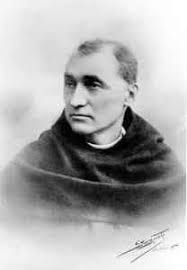
In his major ecclesiological work L’Église et sa Divine Constitution, he strongly argued that the triple munera (to teach, sanctify, and govern) are received together in episcopal consecration itself. Gréa taught that Christ, through one single mission from the Father, is simultaneously Doctor, Sanctifier, and King. Likewise, the episcopal consecration transmits all three munera inseparably. He insisted these were not merely juridical prerogatives conferred later, but ontological realities infused with the sacrament.
For an accessible English-language treatment of Gréa’s work, see:
https://sicutincensum.wordpress.com/2018/01/15/dom-greas-the-church-and-her-divine-constitution-1-2/
This anticipates the later theological insight that the munus regendi is conferred not by papal assignment, but by the sacrament itself. What remains is for that munus to be activated licitly.
Section IV: Activation Through Epikeia and Tacit Papal Will
If the episcopal consecration confers the office (munus) of governance, then the absence of a reigning pope does not eliminate the reality of that office; it merely impedes its ordinary activation.
But what if God, foreseeing such a crisis, provided the Church with canonical principles that allow this office to be activated extraordinarily and licitly?
Epikeia, the interpretation of law according to equity and the common good, permits the suspension of a law’s strict application when following it would result in harm or absurdity.
Similarly, the Church has long recognized that in situations of grave necessity or impeded authority, jurisdiction may be supplied or presumed; not invented, but drawn from the Church’s own juridical and sacramental constitution.
In historical mission territories and during papal interregna, priests and bishops operated without explicit papal mandate but their acts were later recognized as valid and licit, under the principle of presumed papal will or tacit delegation. This is, in essence, an instance of tacit papal approval, based not on direct delegation, but on the Church’s presumption that the pope would have granted it had he been available.
If episcopal consecration gives the ontological munus of governance, and the normal channel of activation is blocked (due to the absence of a true pope), then the principle of epikeia; combined with the Church’s presumptive favor toward the salvation of souls and the tacit will of the papacy in emergency conditions; may suffice to licitly activate the jurisdiction attached to that office.
Thus, sede bishops could be said to exercise personal ordinary jurisdiction (that is, jurisdiction attached to their person as bishops, not to a territorial diocese) over the faithful who adhere to them in good conscience, in a state of emergency, and with the intent of remaining in communion with the true Church.
Sidebar: Historical Examples of Personal Ordinary Jurisdiction
While most bishops exercise territorial jurisdiction, the Church has long recognized forms of personal ordinary jurisdiction: that is, jurisdiction attached to persons rather than geography. These include:
Vicars Apostolic: In missionary regions where no diocese exists, bishops or priests may be appointed as Vicars Apostolic, exercising full ordinary jurisdiction over Catholics in the area, though not attached to a diocese. This shows how the Church can authorize personal jurisdiction in extraordinary circumstances.
Military Ordinariates: Bishops with jurisdiction over all Catholics in a nation’s armed forces, regardless of where they are stationed geographically. These ordinariates function independently of territorial dioceses.
Personal Prelatures (e.g., Opus Dei): Jurisdiction is exercised over members of the prelature according to their status, not their location. This model was formalized post-Vatican II but reflects earlier juridical principles.
Confessors for Religious Orders: Some priests and bishops are granted ordinary jurisdiction to hear confessions and govern members of religious institutes, not based on diocesan assignment but on their personal office.
Apostolic Administrators without a See: Sometimes bishops are appointed to govern temporarily over a diocese or ecclesial community, holding ordinary jurisdiction without a permanent episcopal see.
These precedents demonstrate that personal ordinary jurisdiction is not a novelty, though it is always historically conferred by papal mandate. What is proposed in this article is that, under extraordinary and unprecedented conditions, the activation of the munus regendi itself (grounded in sacramental reality and licitly invoked through epikeia and presumed papal will) could sustain this same juridical structure without a reigning pope.
Section V: Apostolicity, Visibility, and Ecclesial Mission
To preserve formal apostolicity, the Church must retain not only apostolic orders but apostolic governance. That is, it must preserve successors of the apostles who truly govern: i.e., who teach, sanctify, and bind consciences; not merely those with valid orders.
Traditional theology held that ordinary jurisdiction is the usual vehicle of apostolic governance, typically conferred by canonical mission. However, when canonical mission cannot be conferred in the ordinary way, such as during a prolonged sede vacante, the Church may presume, through epikeia and tacit papal will, that bishops validly consecrated with the munus regendi exercise a form of apostolic mission suited to extraordinary conditions.
This preserves not just the matter (valid bishops), but the form (true office with the capacity to govern the flock).
Moreover, this framework preserves the visibility of the Church. If sede bishops licitly exercise personal ordinary jurisdiction, then the Church’s apostolic hierarchy continues to function. It is not reduced to a hidden or potential structure, but remains visibly operative among those who hold fast to the Catholic Faith.
And this episcopate still fulfills the Church’s missionary mandate. Bishops with the munus regendi, exercising governance according to traditional norms and with the intent to restore communion with the true See of Peter when possible, retain the Church’s missio: its divine mission to teach and sanctify.
The sede thesis, properly developed, does not result in a hidden, invisible church of pure potentiality. It preserves the three essential marks of apostolicity: apostolicity of orders, apostolicity of jurisdiction, and apostolicity of mission.
This also finds historical analogy in the Western Schism, when rival claimants to the papacy existed and many bishops operated under uncertainty. The Church later recognized legitimate jurisdiction in some of those who had acted in good faith during that chaos.
Answering Objections
What about Pius XII’s teaching in Ad Apostolorum Principis?
Pius XII, in Ad Apostolorum Principis (1958), stated:
“In the rite of episcopal consecration there is undoubtedly conferred the power of order; but the power of jurisdiction, which is conferred only by the Roman Pontiff, is clearly distinct from the power of order.”
This is often cited to deny any possibility that jurisdiction could be transmitted without papal mission. But a careful reading, especially in its juridical context, permits a more nuanced understanding.
First, the document addresses the normal canonical process, not extraordinary ecclesiological scenarios like a universal defection of the hierarchy. Pius XII’s intent was to oppose illicit consecrations in China, not to issue a dogmatic definition about jurisdiction’s ontological source.
Second, when the Pope speaks of “power of jurisdiction,” he may be referring to the authorization to exercise jurisdiction, rather than the ontological capacity or office (munus) conferred in the sacrament. Theologians like Dom Adrien Gréa argued that the office to govern is received in consecration itself, but its use ordinarily requires papal activation. Thus, Pius XII’s statement may refer to the actual granting of canonical mission, not to the existence of the office or capacity itself.
In extraordinary cases (like a prolonged sede vacante or impeded papacy) the office could still exist in bishops validly consecrated with the intent to serve the Church, and the Church’s legal principles (epikeia, supplied jurisdiction, tacit papal will) may permit its lawful activation.
Therefore, this reading does not contradict Pius XII’s juridical instruction, but situates it properly within the Church’s broader canonical and theological framework.
Does this make sede bishops no different from the Orthodox?
No. The Orthodox have separated themselves from the Roman Pontiff and reject his primacy. Sede bishops, by contrast, acknowledge the Roman See as vacant and aim to restore communion with a future true pope. Their sacraments, theology, and juridical self-understanding remain grounded in the Roman tradition.
Moreover, the Orthodox reject key dogmas defined after the schism and persist in public heresy. Sede bishops, despite lacking canonical mission, do not formally reject any Catholic dogma.
Is this theory novel?
In its application, yes; but its principles are not. Theories about jurisdiction being rooted in sacramental munera, and of activation through epikeia and presumed papal will, have solid precedent. What is new is their combination in response to the unprecedented post-Vatican II crisis.
Conclusion: The Path of Coherence and Hope
This thesis proposes that the Church can retain formal apostolicity even in the unprecedented crisis of a prolonged sede vacante. Through sacramental theology, canonical equity, and historical precedent, it is possible to argue that bishops validly consecrated in the apostolic line, who possess the munus regendi, can licitly exercise ordinary jurisdiction in a personal capacity by way of epikeia and presumed papal will.
This preserves the structure, visibility, and mission of the Church without requiring canonical fictions or hidden churches. It also opens a path forward for unity, truth, and order when God restores the papacy in act.
Far from undermining indefectibility, this framework seeks to uphold it; by showing that the divine constitution of the Church contains within itself the juridical flexibility and sacramental power to survive even the gravest papal vacancy.
This is not an innovation, but a return to principles embedded in the Church’s own history and theology; principles that testify to her resilience, her mission, and her indefectible life through all ages.
Comments