A consequence of the german ideology is a willed ignorance about the facts of WWII itself. Nearly all mainstream historians for the past thirty years—Broszat, Browning, Gerlach, Kershaw, Longerich, etc— think Hitler decided on the final solution in late 1941. There is dispute as to why—e.g. the failure of deportation efforts, the failure of operation Barbarossa, paranoia about Jews brokering the alliance between the US and Russia, and, perhaps most crucially, the entrance of the US into the war subsequent to Pearl Harbor. Göbbels seemed to concur with this view, writing in his own notebook following a Dec 12, 1941 meeting with Hitler: “He [Hitler] warned the Jews that if they were to cause another world war, it would lead to their own destruction. Those were not empty words. Now the world war has come. The destruction of the Jews must be its necessary consequence.”4 The minority view that Hitler had planned to commit genocide all along is, for many reasons, difficult to square with the evidence. Yet Germans dont merely hold this minority view, they cling to it and resist discarding it in the face of counterveiling evidence as if doing so would make them evil. The idea of Hitler being motivated by pure irrational hatred seems to grant them ethical status and security. Why? Because reasons would make Hitler, according to the ideology, less evil, and the whole cultural project is to subjectively distance oneself from Adolf Hitler by making him objectively as evil as possible. This project runs on pride, not humility. The reality is that Hitler blamed the Jews for the US entry to both WWI and WWII and that his anti-semitism had this predominant source. This doesnt make punishing all of european Jewry good,
On the (post-war) German Ideology
the Neglected (Kriegs-) Generation and the Neglected Origin of Inter-Generational Animus
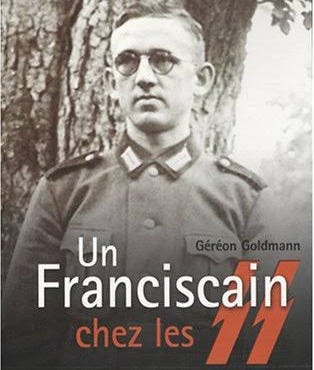
Father Gereon Goldmann was an SS soldier who was ordained without having finished his seminary education at the expressed wishes of the pope in the middle of WW2. Goldmann discerned his vocation before the start of the war and, rather than fight against the enemy, he began to care for the spiritual well being of his men. He would scavenge for consecrated hosts in chapels, churches and monasteries all throughout northern italy to return to nourish his brothers in arms. He would famously wield his pistol, not against the enemy, but against stingy priests and bishops who wouldnt let him depart with the Blessed Sacrament for his brothers. Learning of his desire to care for the souls of german soldiers, a religious sister organized hundreds of Nuns to pray for his ordination and safety. Their intercession proved remarkably potent. After He won a personal audience with the Pope, Goldmann was granted emergency permission to be ordained, which would improbably transpire a few years later in a prison camp in North Africa. And if you read his story, Fr Goldmann´s guardian angel would steer him out of near death situations— for instance commanding Goldmann once to dig a foxhole and jump in it minutes before arial bombing would tear through the forest he was traversing. As a rare priest with unfinished seminary education, he said Mass, heard confessions, and administered last rites to the german soliders.1
Its the sort of story that helps one see the complexity of WW2 from the german side. If you read about him, its obvious Fr Gereon Goldmann was a hero. And its obvious that he was a hero regularly given supernatural graces to perform his vocation. So God wanted the Nazi troops to have access to the Blessed Sacrament? The answer should be obvious, yet its strangely jarring to bourgeois western sensibilities. He was critical of the Nazi´s and was even sentenced to death by them, but, when acquitted, he put back on the uniform and went back to work. Fr Goldmann worked for a side where heroes havent been allowed to be acknowledged or revered. He worked for a side where only atrocities and vice are permitted to be seen.What happens to a society when their fallen heroes aren´t honored, nor even forgotten, but whose memories are held in open disrepute?
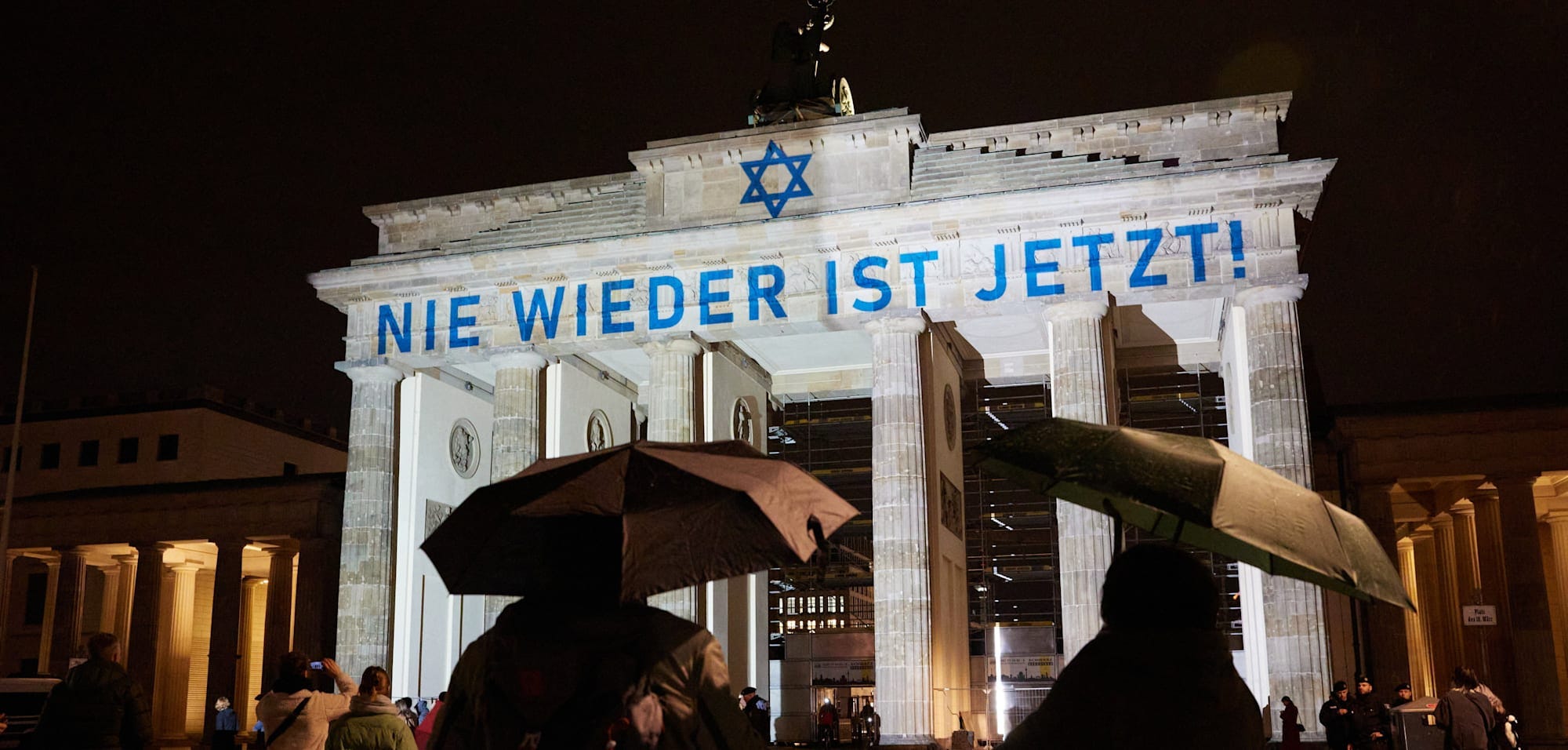
To fixate on and enlarge the flaws of a person is to hate that person. Same with a group of poeple. And it seems like this acute generational animus, more than anything else, has proved to be a curse on the german people. The cultural post-war ethos in germany was erected on a shoddy foundation, on a prideful condemnation of the kriegsgeneration (i.e. “war generation“) that succumbed to national socialism. Germans were taught in school to self righteously think, speak, and act like they would have been Franz Jägerstädter or Dietrich Bonhöffer had they lived in the 1930s. Yet this conviction makes them almost more pliable to political pressure and tyranny than resilient and composed in the face of evil.
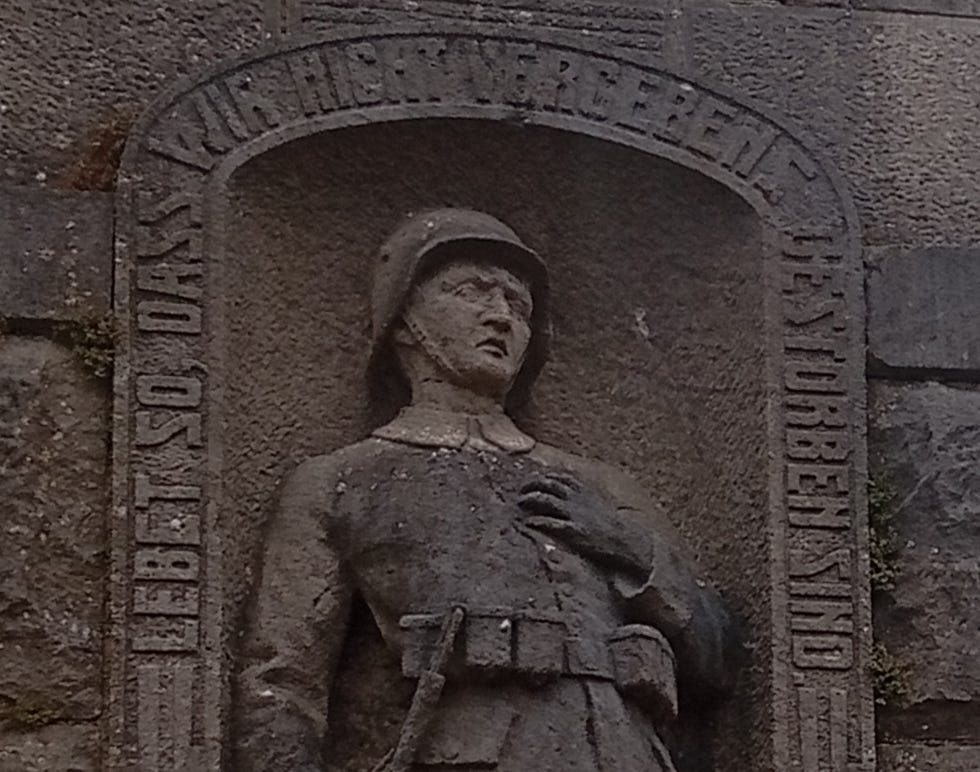
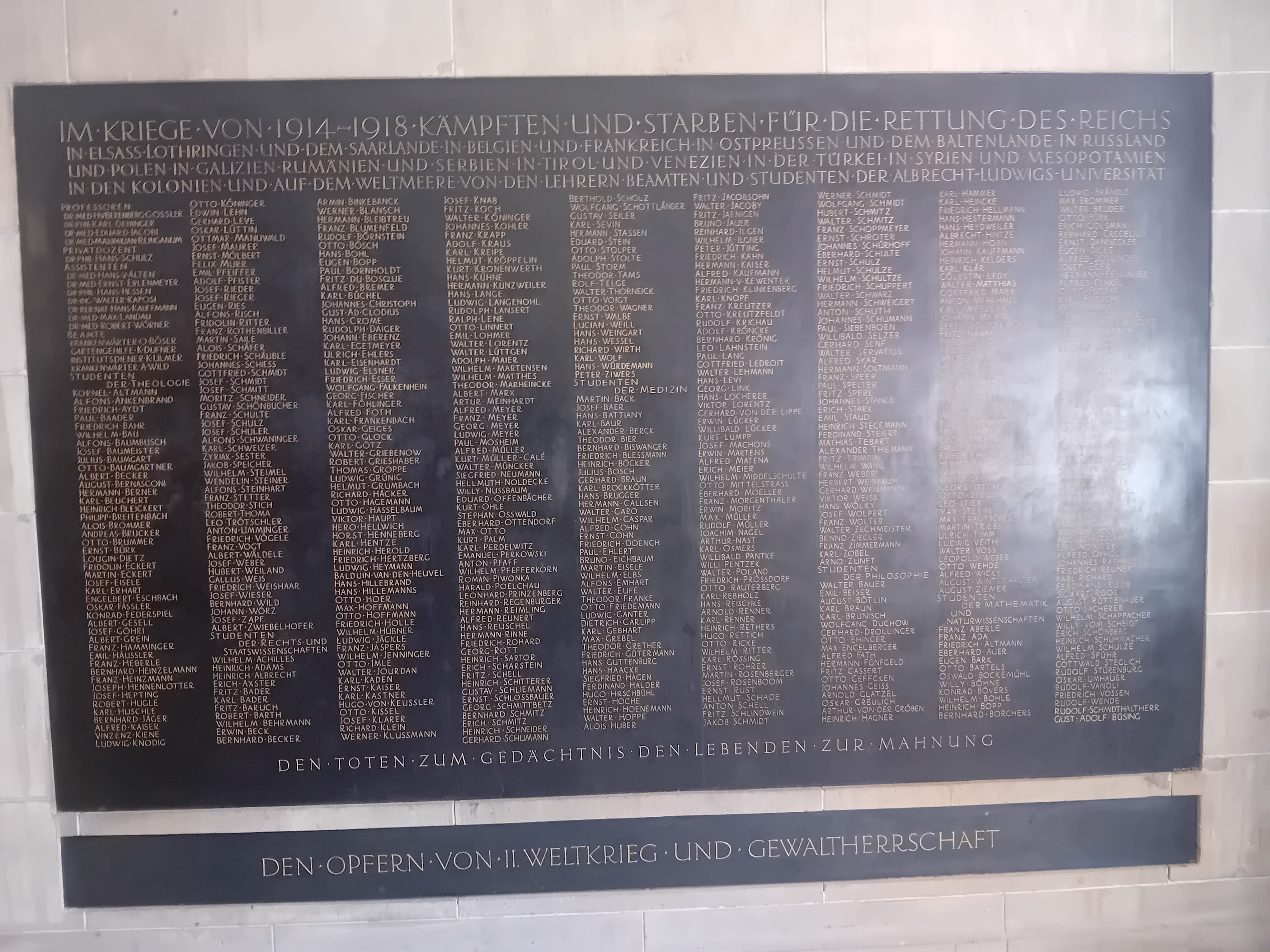
How different would germany be today if the generations following the second world war were told they should be like Fr Gereon Goldmann? Rather than to not be like Hitler, Göbbels and Hess as a primary point of ethical reference?2 Its hard to imagine because it would be a substantially different—a positive, rather than a negatively framed— sort of culture. The presumed ethical superiority of the post-war generations to the “evil” kriegsgeneration that came before has been ritualized into the cultural fabric in matters linguistic, memorial, and architectural in germany, where trite expressions of collective guilt as well as attempts to increase the awareness of the victims and crimes are quite commonplace. Yet these efforts are at least partially ritualized hubris rather than humility: for why is genocide memorialized so differently in germany in contrast to all other cultures? unless germans think themselves morally superior?
Our Lord condemns this attitude in Matt 23:29-31 “Woe to you, teachers of the law and Pharisees, you hypocrites! You build tombs for the prophets and decorate the graves of the righteous. And you say, ‘If we had lived in the days of our ancestors, we would not have taken part with them in shedding the blood of the prophets.’ So you testify against yourselves that you are the descendants of those who murdered the prophets.”
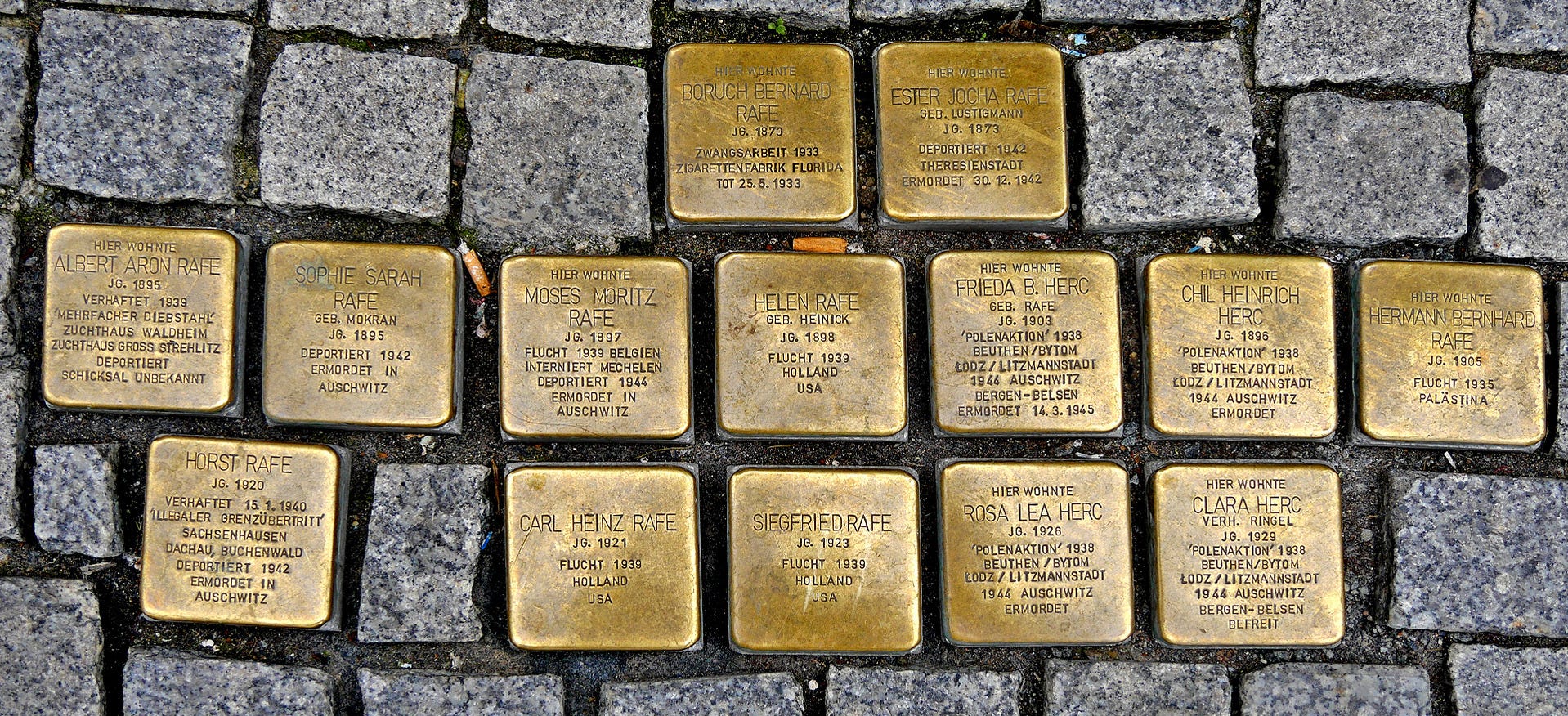
Yet, this is what 99% of germans seem to believe: If we had lived in the 1930s, we wouldnt have been party to the NSDAP hype. This hubris warps ones perspective of the past and removes it as both a source of humility and strength. Elders have the power to bless and curse even from the realm of the dead. And germans will tell you they live beneath the curse of the generation that was given the label ´greatest generation´ in the US. And they aren´t wrong, but it seems like the curse is, if real, largely self imposed. It´s their own animus that cut themselves off from the strength of their fathers, culture, and past.
If contemporary germans were so serious about not committing genocide, they would teach in schools the reverse: why each student would have been a Nazi had they lived in the 1930s— i.e. the manifold reasons why national socialism was appealing in that moment, and why humans are weak in general and susceptible to tyranny.3 These would also be reasons that could exonerate their forefathers to some extent. Yet in the german ideology this isnt allowed. Instead, here, moral purity has its basis in seeing this generation as succumbing to “pure evil.” To seek to understand what happened with nuance could contaminate the soul. Any sympathy or complexity threatens the prideful and largely performative claim on being “good.”
A consequence of the german ideology is a willed ignorance about the facts of WWII itself. Nearly all mainstream historians for the past thirty years—Broszat, Browning, Gerlach, Kershaw, Longerich, etc— think Hitler decided on the final solution in late 1941. There is dispute as to why—e.g. the failure of deportation efforts, the failure of operation Barbarossa, paranoia about Jews brokering the alliance between the US and Russia, and, perhaps most crucially, the entrance of the US into the war subsequent to Pearl Harbor. Göbbels seemed to concur with this view, writing in his own notebook following a Dec 12, 1941 meeting with Hitler:
“He [Hitler] warned the Jews that if they were to cause another world war, it would lead to their own destruction. Those were not empty words. Now the world war has come. The destruction of the Jews must be its necessary consequence.”4
The minority view that Hitler had planned to commit genocide all along is, for many reasons, difficult to square with the evidence. Yet Germans dont merely hold this minority view, they cling to it and resist discarding it in the face of counterveiling evidence as if doing so would make them evil. The idea of Hitler being motivated by pure irrational hatred seems to grant them ethical status and security. Why? Because reasons would make Hitler, according to the ideology, less evil, and the whole cultural project is to subjectively distance oneself from Adolf Hitler by making him objectively as evil as possible.
This project runs on pride, not humility. The reality is that Hitler blamed the Jews for the US entry to both WWI and WWII and that his anti-semitism had this predominant source. This doesnt make punishing all of european Jewry good, but it does make the retaliatory action more human. And the german ideology won´t permit this, it insists “good” will come from increasing the objective evil of Adolf Hitler. The Christian spirit, in contrast, works toward humility. It would seek to understand Hitler by making him as objectively good as possible without betraying the facts, and then subjectively try to see how close to him we might be as a warning. The german ideology runs on animus, not charity towards enemies. Would it really make the world a worse place if the life and decisions of Adolf Hitler were given a hermeneutic of charity? A lot of germans seem to think so.
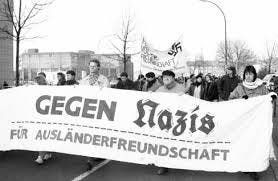
Yet, this intergenerational animus didnt just stay put. It infected the whole world— if germany provides the clearest, most potent and perhaps the original example of it. People still speak of their “nazi“ grandfather or great grandfather with shame here. But the spectre of “Nazis” as a negative reference point to establish moral rectitude seems only to have increased as time has passed. The countries that forced this punishment upon the germans—or did they welcome it?— seem to have been themselves overtaken by the same negative spirit starting in the US with the post-war boomers. Boomer is now a pejorative term. And with each subsequent generation, the gen-x, millennial, gen z caricature is largely negative, and this caricature provides the reference point for the reaction and rebellion of the next generation.
No ideology can ever improve upon a past it wont consent to and doesnt respect. Because we are products of our past, we have to work with not against the stream, even if we have very little to work with. The prescribed psychology of the german ideology is self defeating because it trips on the following rule: your psychological orientation towards your parents will be reproduced in your children. So if you disrespect them, prepare to be disrespected. If you fixate on and enlarge their flaws then expect the same treatment.
You can only imitate your forefathers: if you focus on the evil in them you will become this evil by trying to avoid it; if you focus on the good they exemplified then you can creatively manifest this good in the present. This leads to the following conclusion: If germans were serious about not committing genocide, they would do more to honor their own fallen soldiers in WW2.5 To fixate on evil creates weakness, its a temptation for self-victimization and often an excuse for bad conduct. The german ideology perpetuates itself because those weakened by it donate a far greater sample of evil deeds to tempt the next generation. This will continue until some generation is so weakened by the german ideology, that it realizes the only way forward is to honor the generations that fell prey to it.
No religious text seems more sensitive to this dynamic than the Bible, where both story and law again and again issue warnings about the danger here of failing to honor elders and the dead. Many forms of faux traditionalism have their root in this self defeating, un-traditional negative spirit. Tradition honors elders, full stop. Tradition honors elders, if nothing else, because they gave life. In the german ideology, pride and ingratitude insist on damming up the flow of life and wisdom from one generation to the next.
True humility would, as strange as it sounds in the case of Nazis, look for and find whatever good was to be found in that generation, and try to honor and imitate it—because this is all one can do— without honoring or imitating the evil to which they were party. To love Nazis by seeing them in the best possible light (without sacrificing truth or reality) is the best way to not be like them. If you do this, a beautiful and tragic sense of life comes into view to strengthen you. If you do this, ones tiny, vital, and magnificent stature as a human being stands out in freedom, a human being rooted in a specific place, held by duty in a specific time in the course of generations. And if you try to do this explicitly and publicly, and seek to find, recognize, and honor the good in the case of the “war generation” (i.e. kriegsgeneration) here in germany—or any other despised generation elsewhere— you´ll realize the surprising grip of the german ideology still in the present day.
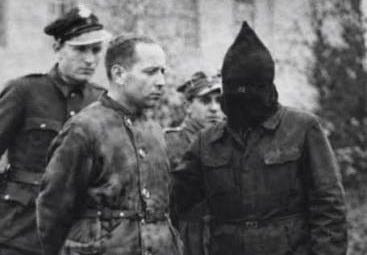
In 1940, a Jesuit house in Poland had been shut down by the SS and all the priests were brought to Auschwitz where they were murdered. All except one. One Jesuit brother was away at the time of their apprehension. And, upon hearing of the fate of his brothers, this priest walked to Auschwitz smuggled himself into the prison camp on his own accord. This brother was caught and then sent Rudolf Höss, the commandant at Auschwitz at the time, begging him to let him die with his brothers in the camp. Höss refused. Moved by this priests courage, he sent him back home but never could forget him.
In his youth, Höss had neglected a call to the priesthood and instead turned away from his faith altogether. Yet, when condemned to execution in 1947, Höss began to fear for his soul. Given the gravity and extent of the crimes he had committed, Höss doubted God´s mercy. And he went to extraordinary lengths to resolve his doubts. In his despair, Höss longed to confess to the Polish priest he let slip away. If he could believe in forgiveness, he knew he needed to hear the words of absolution from the mouth of one of the living men whose sterling life and courage had haunted his memory almost as much as the weight of his crimes. He needed to hear the words of absolution from this man whose life his own actions had irrevocably marred. The Polish priest obliged. He came to visit Höss in detention and heard his four hour long confession shortly before his death. And Our Lord spoke the merciful words of absolution even to Rudolf Höss, commandant at Auschwitz. The same priest stayed to celebrate Mass for Höss the following day.
Thus Höss, for all of his crimes, did something excellent the post-war german ideology doesn´t seem to permit—i.e. repent. Yet its the only thing that can heal this land. And post-war Germans could be healed by his example, if only they would learn to identify with his sin—e.g. if Nazism was a prideful racial ideology that betrayed Germany´s future by cutting it off from its christian past, the betrayal of the german ideology is not different in kind. A christian future will only be won in germany through concrete acts restoring due honor to the previous generations and the kriegsgeneration in particular. Devotion to the Holy Souls is one concrete way to start the required temporal reorientation. Its also a way for blind eyes to begin to discover the unforeseen graces that dwell in the past. We could start by looking at Gereon Goldmann, but should end by praying for Rudolf Höss.
you can give me a small tip here: https://buymeacoffee.com/sweller
Pentecost 35% Discount: You can also support my writing with a paid subscription for 19$\yr here.
This post was an application of my broader philosophical project outlined below:
A Sketch of the Privationist Religion
“My friend, there are two patterns set up in reality. One is divine and supremely happy; the other has nothing of God in it, and is the pattern of the deepest unhappiness. This truth the evildoer does not see; blinded by folly and utter lack of understanding, he fails to perceive that the effect of his unjust practices is to make him grow more and more …
Check out some of my other cultural criticism:

Or a post about my mission:

Or some reports from my pilgrim\camino blog:

More About Fr Gereon Goldmann (I found this write up on facebook and abbreviated it: https://www.facebook.com/groups/667596886725236/posts/1834348503383396/)
“It was the last day of August, 1939, that young Karl along with two hundred other seminarians arrived at the Army barracks in Fulda; there were thousands of other young German recruits as well. Needless to say, the seminarians were looked down upon by the officers and non-coms responsible for their training. They were considered almost as traitors to the Fatherland — lesser creatures than the manly Nazis. Time and again the well-trained seminarians would prove their worth. Not only were they brilliant and highly educated, their bodies were hardened from outdoor activities and the rigors of religious life. Nevertheless, the most odious duties fell to them, and for the first seven weeks of their training they were given arbitrary duties on Sundays to keep them from Mass and the sacraments.
It was the refusal on the part of the seminarians to swear an oath to the Fatherland without the name of God being invoked that actually earned them a promotion of sorts. Karl insisted that the only true oath must be sworn by the the name of God. Once again, his superiors did not know how to handle him. The following day, the commander returned with the news that they would be able to swear the oath in God’s name and that they would be removed from the regular army in order to enter the Waffen SS. This was astonishing news, for the SS was an elite group apart from the Wehrmacht. Hitler saw the SS (Schutzstaffel or “Protective Squadron”) as the armed wing of the Nazi Party during the war; after the war was won he planned on making it the elite police force of the Party . The SS was headed by Heinrich Himmler and functioned independently of the regular army. The seminarians were chosen because they were smart, well educated, in good physical condition and loyal Germans. No one was more surprised than they! The duties were much easier as they were trained as radio officers and had Sundays off. Amazing! The seminarians took full advantage of their new status to continue their prayer life, studies, and assistance to those German soldiers who remained Christian.
Moving into France, the young SS soldier became even more valuable to the Germans (or so they thought) because he knew French. It was his job to use his French to commandeer gasoline and other supplies from the French villagers. While he did take some, his habit was to tell the villagers to bury their gasoline and he would return for it at a later date. Never did he take all of their necessary supplies. In fact, he and the other seminarians were instrumental in assisting starving French children by giving them food meant for the German army. He was able to ascertain when attacks on churches were planned, warn the priests to hide themselves and place the Blessed Sacrament and necessary altar wine and bread in safekeeping with the villagers. Priests were usually shot on sight, but not if Goldmann had anything to do with it! He was shocked at the animalistic behavior of the German troops, looting their fellow soldiers who had fallen in battle, some even before they were dead, so crazy with greed were they. The seminarians attended Mass at the little village churches as often as they could, once even singing a choral Mass on Bastille Day, causing their superiors to accuse them of treason for celebrating the French national day with the enemy.
In Paris, Karl took the opportunity to visit the many beautiful churches of the city and take spiritual counseling with one Abbe Stock, the spiritual counselor of the Germans in the city. Given the opportunity to undergo officers’ training, he eagerly signed up, knowing that if he were in an even more prestigious position, he could do more good. During the training, Karl and another seminarian were the only two who finished a brutal forced march while carrying heavy packs on their backs This event proved to be a turning point in Karl’s career, for shortly thereafter, a number of the seminarians were called into an office where they were to be promoted. Just before they were sworn in, they were informed that one minor detail had to be taken care of: They would sign a paper declaring that they were leaving the Catholic Church and would never again be a part of the Franciscan Order. When the first two summarily refused and the others echoed their support, they all waited to be disciplined or even shot. Instead, the Nazi officer saluted them and declared, “Gentlemen, I salute you. I expected nothing less of you.” Naturally, they lost their officers’ commissions. Worse, the pressure was on. For their refusal to sign, they were constantly harassed by officers and denigrated as disloyal Germans.
Karl felt obligated to protest and was determined to let Himmler and all the other Nazi officers know (in an eight page letter) that he was not disloyal to the Fatherland; it was the Nazi philosophy that he could not agree with. For this he was expelled from the SS and sent back to the regular army. He was the only seminarian brave enough to put his thoughts into writing. His former companions were sent to the Russian front where every one of them was put on the frontline and died in battle. In this instance, Karl’s hard-headedness and courage saved his life.
After his dismissal from the SS, Karl was sent to the Netherlands and then moved eastward toward Russia. It was on the march through Poland that he became aware of the terrible treatment being inflicted upon Jews, Poles, Russians and priests by the Nazis. Their misery knew no bounds. It was obvious that they were considered sub-human by the Nazis. He states in his book, “We drove through Russia, passing endless columns of prisoners sunk in utter misery.” The drive into Russia was halted by that most formidable of Russian weapons, the Russian winter. The morale of the German army was at an all-time low. Karl contracted dysentery and was sent home to recuperate.
All along, Karl had expected an Allied invasion to take place in Sicily. This would gain the Allies a foothold close to the European mainland — the toe of Italy. The Italians were about to turn tail on Germany anyway, and an invasion of Sicily with fresh troops would allow the Allies to pound the few remaining Germans soldiers in Sicily to defeat. On their way to Sicily, Karl’s unit passed Rome. The Pope was nearby! So far, Sister’s prayers and predictions were being answered. Perhaps he could get back to Rome and see the Holy Father.
Karl’s unit had many experiences in Sicily, most of them sad and tragic. One edifying story occurred when his unit was being pounded, his men were dying and a young soldier reminded him that these men were Catholics and needed spiritual as well as physical help. He raced to the nearest church where he asked the priest to minister to his dying men. When the priest refused, he asked for consecrated hosts that he could administer to the dying men himself. “I need the Bishop’s permission for that,” was the reply. Karl then raced up the hill to what was left of the cathedral, obtained permission from the bishop — but only after being forced to put a gun to the Bishop’s head and then made by the Bishop to stoop low to the ground to kiss his ring. A certificate of permission was quickly forthcoming from the Bishop of Patti for “the Catholic cleric of the 29th Panzer Division to bring with due reverence Holy Communion to his comrades, especially the wounded.” That certificate served him and his dying men well in the weeks to come.
Another event proved fateful for Karl. The Germans were vastly outnumbered in Sicily; they were exhausted from running, with English troops hot on their tails and the Italian warships now bombarding them from the sea. They could move only under cover of darkness. One day when they were hiding and resting in the forest, Karl heard a loud voice shout several times “Get up and work!” He awoke with a start asking who had shouted at him. “No one!” Was it a dream? He picked up a shovel and furiously began to dig a foxhole. The men thought he was crazy, but he just knew that he must do it. He dug all day and into the night, so earnestly that one of his friends dug his own foxhole. The other soldiers laughed at them. Exhausted, Karl lay down. When he looked up at the sky, he was horrified to see ten bombers circling like vultures above him. They had been spotted! The bombers swooped down and unloaded twenty bombs on them. He and his companion in digging jumped into their foxholes, covered themselves up and prayed. Karl turned on his stomach to protect the Blessed Sacrament which he carried in his breast pocket. The scoffers attempted to find cover among the trees, but they were all killed.
About three weeks after the event, a letter came from Sister Solana May detailing the extreme sense of fear and dread that came over her on the night of the attack. She rushed to the chapel to pray for Karl’s safety. “Guardian angel, save him!” The hour that she awoke with the fear was the very hour that he first heard the voice.
On his way back to the front, Karl found himself in Rome — so close to the Holy Father! He arranged to meet with the General of the Franciscan Order and boldly asked him to arrange a meeting with the Pope, Pius XII, so that he could request ordination. The General was horrified. “Out of the question until you have finished your studies!” Still he would not give up. Karl knew a certain German gentleman, Herr von Kessel, who lived in Rome and who “had connections.” He asked him to get him into the Vatican and, if possible, arrange a meeting with the Pope. With one phone call, the deed was done. The prelate who met him on the way to the audience asked him his business with the Holy Father — apparently a matter of routine. He stated two official matters and one personal. The official matters were approved, but the priest blanched at the personal request for ordination. “The Holy Father has no time to listen to such absurd requests.” He was forbidden to bring the matter up.
Karl thought of Saint Thérèse and her bold request at an audience with Pope Leo XIII asking his permission to enter Carmel at the age of fifteen after her family and the papal officials had forbidden it. If only he could work up the courage of that young girl! Finally, when his turn came in the audience, he spoke the official business. The Pope seemed to sense that he wanted to say something else. Not giving a glance to the accompanying priest, he spilled out his story from the time Sister Solana May began to pray for him until his recent experiences in Sicily where German Catholic soldiers were dying without confession. He had begun in Italian and ended in German. He told the Pope of his note from the Bishop of Patti and how he had been giving soldiers consecrated hosts from monasteries and churches in Sicily and the mainland. The Holy Father was amazed and impressed. Karl left the audience with an official note from Pius XII permitting his ordination despite not having finished theological studies. The Franciscan General was overjoyed and dubbed him Tedesco furioso — furious German. He returned to the front with the precious paper in his pocket.”
Fr Goldmann was also condemned to death by the nazis and was then acquitted. When asked to participate in a plot to kill hitler he first protested on christian grounds that the had signed allegiance to hitler, then was persuaded to help by a christian brother. Her wasnt a conscientous objector but a man whose conscience brought him to serve the men fighting at the front. And this last bit is what can appear controversial.
they do do some of this with the concept of a mitläufer, which comes up in compulsory history on this period. i.e. someone who “goes along with” pressure in the case of a tyrannt or evil regime. a mitläufer was a nominal passive opportunistic person who participated in the nazi regime.
Christian Gerlach, "The Wannsee Conference, the Fate of German Jews, and Hitler's Decision in Principle to Exterminate All European Jews," Journal of Modern History 70, no. 4 (December 1998): 759–812.
https://boris.unibe.ch/74383/1/235167.pdf
Comments